
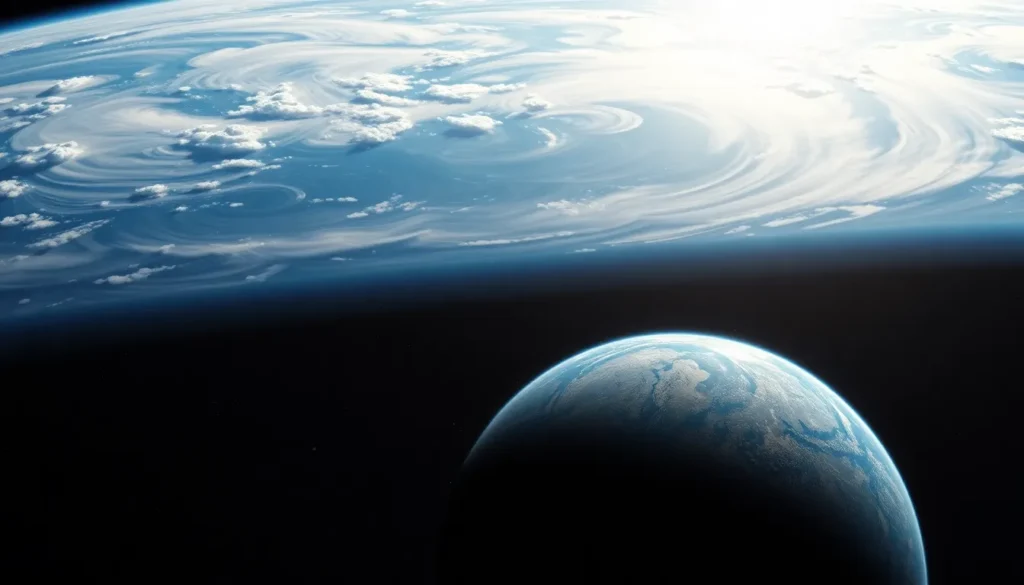

The quest to understand the first year on Earth sparks curiosity and wonder about our planet’s origins. Scientists and historians alike have long debated the timeline of Earth’s formation and the emergence of life. This journey through time reveals not just dates but pivotal moments that shaped everything we know today.
From the fiery beginnings of our planet over 4.5 billion years ago to the development of the first simple life forms, each milestone marks a significant chapter in Earth’s story. Understanding the first year on Earth isn’t just about numbers; it’s about piecing together the intricate puzzle of evolution and the environment that allowed life to flourish. Discovering the answers to these questions can illuminate humanity’s place in the universe.
What Was The First Year On Earth?
Determining the first year on Earth involves evaluating the planet’s formation timeline. Earth’s formation dates back approximately 4.54 billion years, according to radiometric dating of the oldest rocks and meteorites. This period signifies the planet’s transition from a molten state to a solid surface.
The concept of a “year” requires understanding Earth’s orbit around the Sun. A complete revolution takes about 365.25 days, which defines the length of a year. Life began to emerge roughly 3.5 billion years ago, with early microorganisms marking the start of biological evolution.
Key milestones outline Earth’s timeline:
- Formation: Earth formed around 4.54 billion years ago, coalescing from dust and gas in the solar nebula.
- Cooling: The planet cooled over millions of years, forming a solid crust.
- Water Accumulation: Water vapor released from volcanic activity contributed to the formation of oceans approximately 4.4 billion years ago.
- Life Emergence: Simple life forms, such as prokaryotic organisms, appeared around 3.5 billion years ago.
Understanding Earth’s first years provides critical insights into how the environment evolved and set the stage for complex life, influencing the trajectory of evolution leading to present-day biodiversity.
Theories About The First Year

Understanding Earth’s first year involves both scientific insights and historical perspectives. Researchers continue to explore different theories regarding the planet’s early days.
Scientific Insights
Scientists estimate Earth’s formation occurred around 4.54 billion years ago. This estimate derives from radiometric dating of meteorite materials and lunar samples. During its initial year, Earth transitioned from a molten state to a solid crust. Volcanic activity and impacts from celestial bodies significantly influenced early conditions. The cooling planet saw the formation of oceans, likely from water vapor released by volcanic eruptions. Simple life forms emerged approximately 3.5 billion years ago, setting the stage for biodiversity. Research into early atmospheric conditions further supports theories about Earth’s development during its first year.
Historical Perspectives
Historically, various cultures have attempted to pinpoint the beginning of Earth. Ancient civilizations often relied on myths and religious texts for their timelines. For example, some accounts date creation to around 4004 BCE, derived from biblical interpretations. In contrast, modern archaeology and geology emphasize a scientific approach to Earth’s history, aligning with the 4.54 billion-year estimate. Historical frameworks highlight the contrast between mythological accounts and contemporary scientific understanding, shaping how humanity perceives its origins. These perspectives illustrate how historical narratives have evolved alongside advancements in scientific knowledge.
Evidence Supporting First Year Estimates
Understanding the first year on Earth relies heavily on geological findings and astronomical data. These disciplines provide crucial insights into the planet’s early environment and formation.
Geological Findings
Geological evidence indicates that Earth formed approximately 4.54 billion years ago. Radiometric dating of Earth’s oldest rocks, such as those found in Greenland and Australia, reveals ages over 4 billion years. Additionally, the presence of zircon crystals in Australia, dated to around 4.4 billion years, suggests the existence of a solid crust shortly after Earth’s formation. Fossilized remnants of ancient minerals and isotopic signatures reflect conditions of the early environment. Evidence of ancient volcanic activity supports the understanding of how the planet transitioned from a molten state, contributing to crust formation and the establishment of oceans. These geological records, analyzed through stratigraphy and geochronology, paint a coherent picture of Earth’s formative years.
Astronomical Data
Astronomical research complements geological findings by providing insights into Earth’s formation within the solar system. Models of planetary formation suggest that the early solar system consisted of dust and gas swirling around the Sun, resulting in the accretion of planets over millions of years. Computer simulations of this process indicate that the conditions present during Earth’s formation match current scientific estimates of the planet’s age. Moreover, studies of meteorites, which date back to the solar system’s infancy, offer comparative timelines for understanding Earth’s formation relative to other celestial bodies. Observations of distant exoplanets and their formation processes continue to reinforce models that describe how Earth developed early in its history. Such astronomical data enhances our grasp of the timeline concerning Earth’s first year, illustrating the complex interplay of cosmic events and geological transformations.
Cultural Interpretations Of The First Year
Cultural interpretations of Earth’s first year reveal diverse perspectives influenced by myths, legends, and religious texts. These interpretations often contrast with scientific understandings, showcasing a rich tapestry of human thought.
Myths And Legends
Myths and legends provide insight into ancient civilizations’ views of Earth’s origin. Many cultures created narratives to explain the creation of the world.
- Mesopotamian Mythology: The Enuma Elish describes the creation of the world from chaos, where the god Marduk forms Earth from the body of the slain goddess Tiamat.
- Greek Mythology: In Hesiod’s Theogony, chaos precedes creation, leading to the emergence of Gaia (Earth), depicted as both a deity and the physical planet.
- Norse Mythology: The Völuspá, part of the Poetic Edda, explains that the world was fashioned from the body of the giant Ymir, with each part contributing to Earth’s form and function.
These narratives reflect attempts to comprehend complex natural phenomena, anchoring cultural identities in cosmological frameworks.
Religious Texts
Religious texts outline creation narratives that shape followers’ understanding of Earth’s beginnings.
- The Bible: According to Genesis, God created Earth and its life over six days, culminating in the creation of humans, providing a linear framework for time and existence.
- Hindu Texts: The Rigveda presents various creation hymns, including concepts of cyclical time, where the universe undergoes cycles of creation, preservation, and destruction.
- Chinese Cosmology: The Dao De Jing describes the universe’s emergence through the Dao, emphasizing harmony and balance in the creation process.
Religious perspectives often emphasize humanity’s relationship with the cosmos, fostering a sense of purpose and connection to creation.
Understanding Earth’s first year offers a captivating glimpse into the planet’s origins. The transition from a molten state to a solid crust set the stage for the development of oceans and early life forms. This journey highlights not only the scientific milestones but also how various cultures have interpreted these beginnings throughout history.
As research continues to unveil more about Earth’s formative years, it deepens humanity’s connection to the cosmos and emphasizes the intricate relationship between geological processes and the emergence of life. The quest to comprehend this pivotal time remains a testament to our enduring curiosity about the universe and our place within it.


