

Ready to spice up your home with some hands-on creativity? Concrete may not sound like the most exciting material at first, but trust us, its potential is sky-high. From stunning outdoor pathways to chic planters, concrete DIY projects can transform your space without demanding a master’s degree in engineering. So grab those gloves, roll up those sleeves, and let’s jump into why concrete deserves a spot on your next weekend project list.
Benefits Of Working With Concrete
Concrete is not just for sidewalks and building foundations: it’s also incredibly versatile for DIY projects. First and foremost, it’s durable. When properly mixed and cured, concrete can withstand the test of time, making it suitable for outdoor and indoor applications alike.
Secondly, concrete is readily available and affordable. With just a trip to your local home improvement store, you can find everything you need to start your project without very costly. Also, its adaptability allows for various textures and finishes, meaning projects can complement any decor style. The aesthetic value of concrete is often underrated: it can be polished, stained, or textured for beautiful effects.
Finally, the satisfaction of transforming bare materials into functional art cannot be overstated. Each project completed can cause a surge of pride, turning your home into a showcase of your creativity.
Essential Tools And Materials
Before jumping into concrete love affairs, it’s crucial to gather the right tools and materials. Here’s a list to get started:
- Concrete Mix: Choose pre-mixed bags for smaller projects or bulk for larger ones.
- Water: Yes, it’s vital. Don’t skimp on this. Use clean, cool water for mixing.
- Mixing Container: A wheelbarrow or a large plastic tub works best.
- Trowel: Essential for smoothing and spreading.
- Molds: These can be anything from plastic containers to custom-made forms.
- Protective Gear: Gloves, goggles, and masks are a must. Safety first.
- Tamping Tool or Board: Useful for compacting and leveling the concrete.
- Finishing Tools: Brushes, sponges, or even textures for unique designs.
Popular Concrete DIY Projects
Here are some exciting projects to kickstart your concrete journey:
1. Concrete Planters
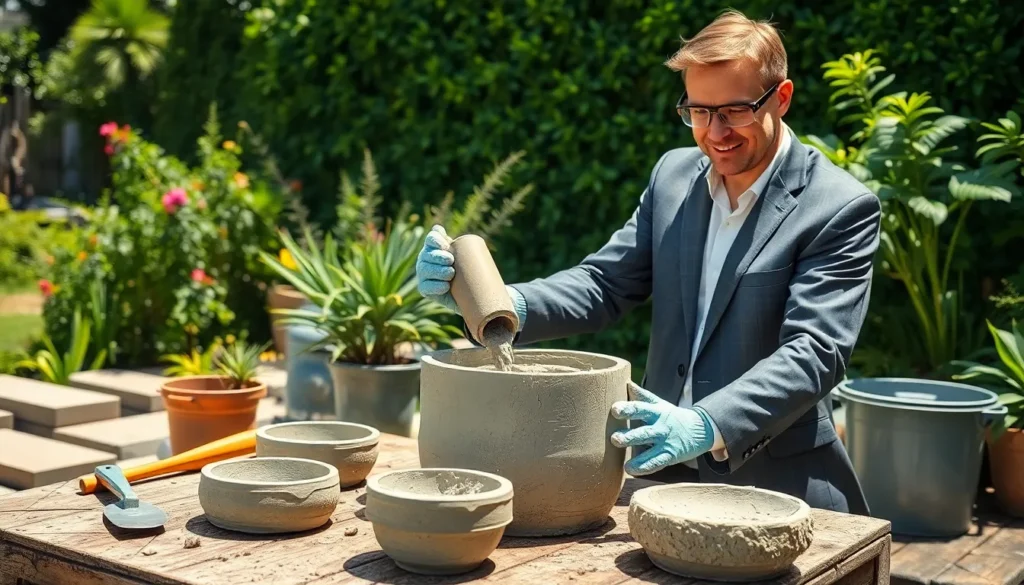
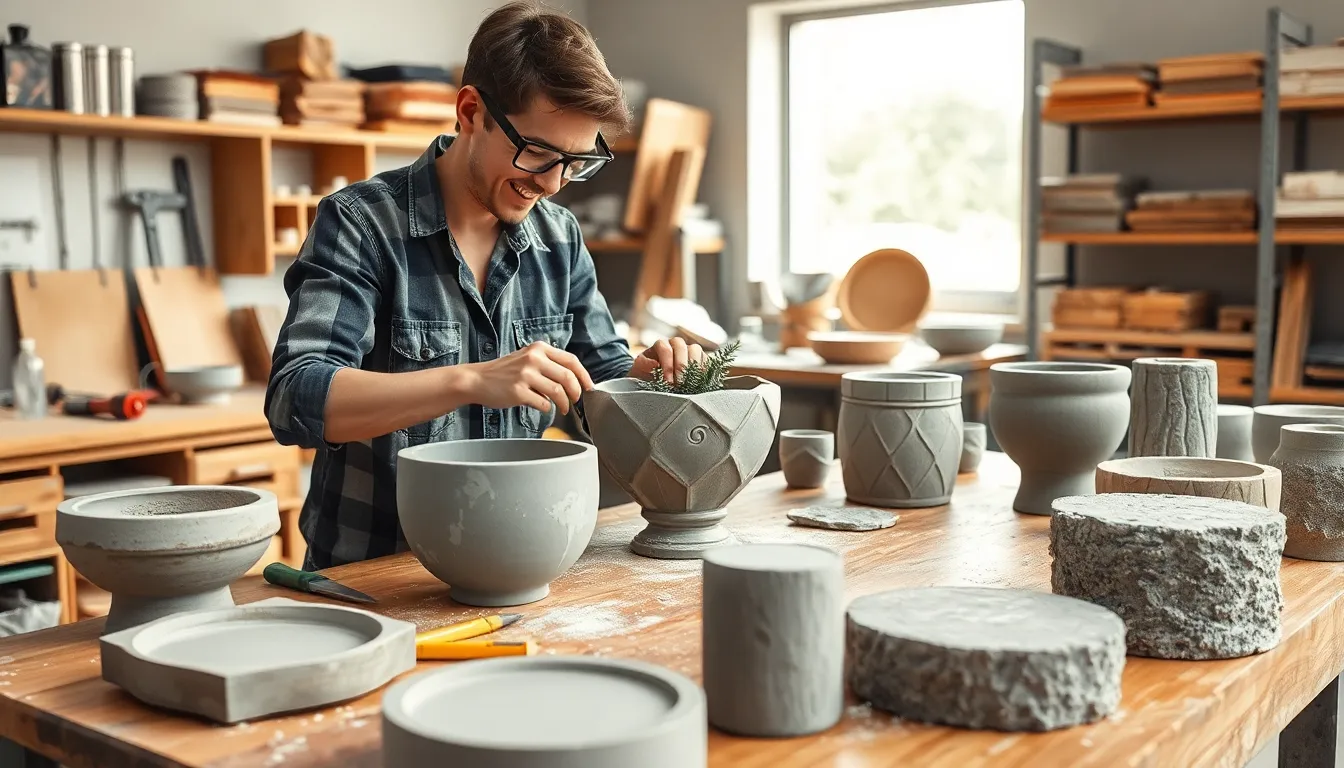
Concrete planters are an excellent way to showcase your greenery. Simply mix your concrete, pour it into molds, and let it cure. You can customize the sizes to fit any plant, from succulents to small trees.
2. Concrete Garden Pathway
A concrete pathway not only adds beauty but also functionality to your garden. Use molds to shape your pathway and keep the design flowing with your landscape. It’s a perfect weekend project that can elevate any outdoor space.
3. Concrete Furniture
Concrete tables and benches create a modern look that’s both chic and sturdy. These pieces can seamlessly blend into both indoor and outdoor settings. With proper sealing, they will resist stains and weather without a hitch.
4. Concrete Countertops
Upgrade your kitchen or bathroom with custom concrete countertops. While it may require a bit more skill, the results are stunning. You can choose various textures and finishes, making it a truly unique addition to your home.
5. Concrete Fire Pit
Nothing brings people together like a cozy fire pit. A concrete fire pit can be both stylish and durable, making for an outdoor centerpiece that family and friends will rave about. Plus, it’s a great way to extend your outdoor season.
Tips For Successful Concrete Projects
To ensure a successful project, keep these tips in mind:
- Follow the Instructions: Always read the bag instructions for mixing ratios. This determines the strength of your concrete.
- Work Quickly: After mixing, time is of the essence. Concrete sets relatively fast, so be on your toes.
- Don’t Skip Curing: Proper curing is essential. Keep your concrete moist for at least a few days after finishing.
- Experiment with Colors: Consider adding pigments to your mix for unique shades, making your project stand out.
- Use Release Agents: If you’re using molds, a light spray of release agent can make demolding easier and helps maintain mold integrity.
Common Mistakes To Avoid
Like any DIY project, potential pitfalls exist. Here are some common mistakes to dodge:
- Inadequate Mixing: Make sure you mix thoroughly enough to avoid dry spots. A bad mix leads to weak concrete.
- Wrong Water Ratio: Too much or too little water can alter the strength and durability.
- Neglecting Proper Ventilation: Always mix in a well-ventilated area when using concrete, especially indoors, to avoid inhaling harmful dust.
- Ignoring Weather Conditions: Hot weather can dry out concrete too quickly, while cold can prevent it from curing properly. Understand the environment before starting.
- Overworking the Surface: Once you’ve poured your concrete, don’t tinker too much. Overworking can bring excess water to the surface and weaken it.


