
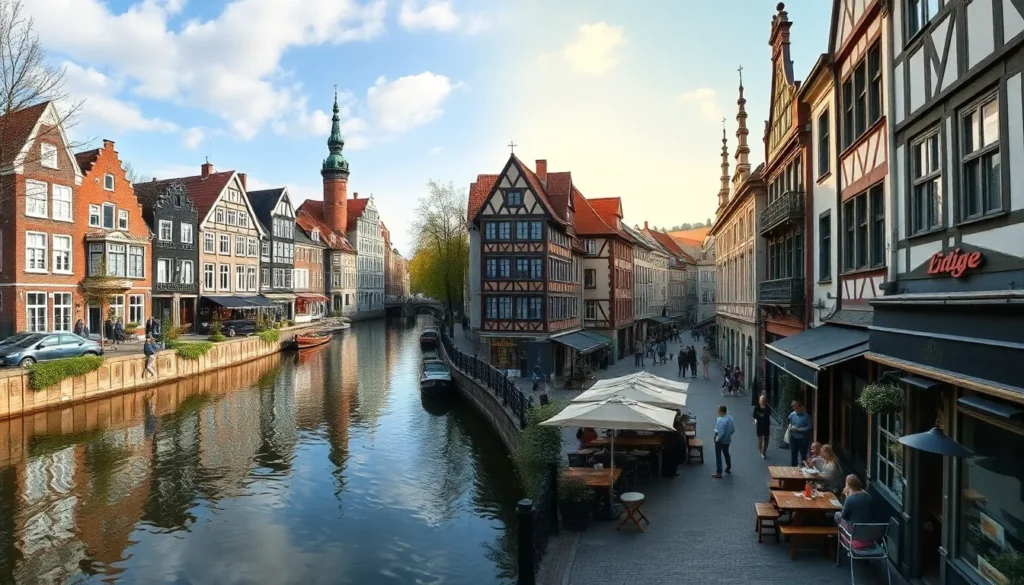

Dutch and German often spark curiosity among language enthusiasts and travelers alike. While both languages belong to the West Germanic branch of the Indo-European family, they each hold unique characteristics that set them apart. This distinction can lead to confusion, especially for those encountering these languages for the first time.
Understanding the differences and similarities between Dutch and German is essential for anyone looking to engage with the cultures and communities where these languages thrive. From grammar to pronunciation, each language offers its own nuances that reflect the rich histories of the Netherlands and Germany. By exploring these aspects, one can appreciate the beauty and complexity of both languages.
Overview of Dutch and German Languages
Dutch and German share a common linguistic ancestry, both emerging from the West Germanic branch of the Indo-European language family. The historical evolution of these languages has led to distinctive features that set them apart.
Geographic Distribution
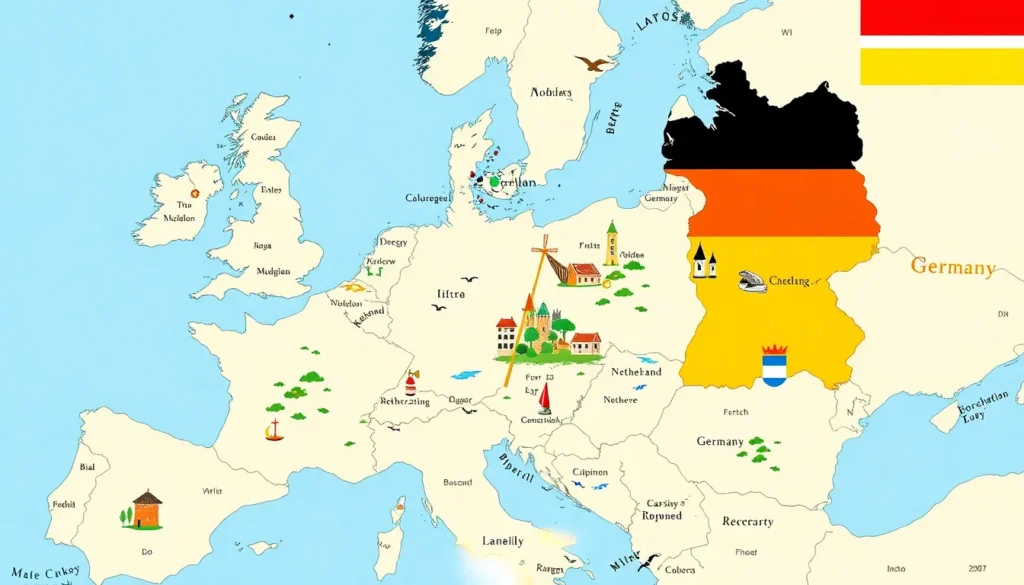
Dutch is primarily spoken in the Netherlands and northern Belgium, known as Flanders. Approximately 23 million people speak Dutch as their native language. German, with around 76 million native speakers, is chiefly used in Germany, Austria, and parts of Switzerland.
Linguistic Characteristics
Dutch and German exhibit notable differences in vocabulary and syntax. Dutch vocabulary incorporates elements from French and English, while German reflects influences from Latin and Greek. Their grammatical structures display variations; for instance, German uses four grammatical cases (nominative, accusative, dative, genitive), whereas Dutch predominantly utilizes a more simplified system with fewer inflections.
Pronunciation and Phonetics
Pronunciation varies significantly between the two languages. Dutch features guttural sounds, especially the “g,” which is pronounced differently than in German. German pronunciation includes instances of vowel length that can change meaning. Both languages employ similar consonant sounds, but the articulation can differ based on regional accents and dialects.
Mutual Intelligibility
Despite their similarities, Dutch and German are not mutually intelligible. Speakers of one language may find familiar words and structures in the other, but comprehension often requires dedicated study due to significant differences in grammar and pronunciation.
Cultural Context
Understanding the cultural nuances tied to each language enriches the learning experience. Dutch reflects the maritime heritage of the Netherlands, while German embodies the diverse historical influences of Central Europe. Both languages open gateways to their respective cultures, arts, and histories, highlighting the rich traditions of their speakers.
Historical Background
The historical development of Dutch and German reveals distinct paths shaped by geographical, social, and cultural factors.
Origins of Dutch
Dutch originated from the West Germanic language group, with roots tracing back to the early medieval period. The language evolved from Old Dutch, which was in use around the 5th to 12th centuries. The influence of Latin during the Roman Empire and later, French elements from the medieval period, greatly shaped its vocabulary. Standard Dutch emerged in the 16th century, primarily influenced by the centralization of power in the Netherlands and the establishment of a standardized language for literature and administration. This standardization facilitated communication among various regional dialects and solidified Dutch as a distinct language within the Germanic family.
Origins of German
German also stemmed from the West Germanic branch, with its history initiating around the same time as Dutch. Old High German emerged between the 6th and 11th centuries, significantly influenced by Latin due to religious and cultural exchanges. The language underwent substantial changes during the Middle Ages, with the rise of various dialects and regional forms. The standardization of German began in the 16th century with Martin Luther’s translation of the Bible, which unified different dialects into a more consistent form known as New High German. Over centuries, German absorbed vocabulary from Latin, French, and other neighboring languages, reflecting its diverse cultural interactions across Central Europe.
Linguistic Similarities
Dutch and German share notable linguistic similarities due to their common West Germanic roots. Understanding these similarities provides deeper insight into the connections between the two languages.
Vocabulary Comparison
Vocabulary between Dutch and German exhibits both overlap and divergence. Shared root words often appear in both languages. For example, “water” in Dutch translates to “Wasser” in German, while “huis” in Dutch means “Haus” in German. Differences arise with words influenced by regional languages; for instance, Dutch uses “fiets” for “bicycle,” whereas German employs “Fahrrad.” Even with shared terms, pronunciation and usage can vary significantly, requiring learners to grasp context-specific applications.
Grammar Structures
Grammar structures in Dutch and German reveal both similarities and key distinctions. Both languages utilize genders for nouns, with masculine, feminine, and neuter forms. However, German’s grammatical cases—nominative, accusative, dative, and genitive—complicate its sentence structure compared to Dutch’s simpler system, which primarily includes a subject-verb-object order. Additionally, verb conjugation practices differ, with German verbs demonstrating more complex conjugation patterns influenced by tense and subject, while Dutch tends to have more straightforward verb forms. Understanding these grammatical nuances aids in grasping the foundational differences between the languages.
Linguistic Differences
Dutch and German exhibit distinct linguistic features that set them apart despite their shared origins. These differences span pronunciation, vocabulary, and grammatical structures, impacting comprehension and communication between speakers.
Pronunciation Variations
Pronunciation varies significantly between Dutch and German. Dutch features guttural sounds, often producing harsh or throaty pronunciations, exemplified in words like “graag” (please) and “goed” (good). German, in contrast, places emphasis on vowel length and clarity, with instances like “fahren” (to drive) pronounced distinctly to convey meaning. Furthermore, Dutch employs diphthongs, while German often maintains pure vowel sounds, making their phonetic landscapes quite unique.
Sentence Construction
Sentence construction differs notably in Dutch and German. Both languages utilize gendered nouns, but German incorporates four grammatical cases—nominative, accusative, dative, and genitive—adding complexity to its sentence structures. For example, in German, the article and adjective endings change based on the case, while Dutch maintains a simpler structure with fewer variations. Dutch tends to favor Subject-Verb-Object (SVO) word order, whereas German leans towards a flexible arrangement, particularly in subordinate clauses, where the verb often moves to the end. Understanding these structural differences plays a crucial role in mastering each language.
Cultural Context
Cultural context plays a vital role in understanding the nuances of Dutch and German. Both languages embody unique identities shaped by the histories and traditions of their respective regions.
Influence of Language on Identity
Language serves as a core component of national identity. Dutch reflects the maritime heritage and trade history of the Netherlands, emphasizing innovation and independent spirit. The use of Dutch connects speakers to their rich cultural traditions, from art to literature. German, conversely, embodies a diverse array of regional traditions influenced by Central European history. Speakers of German connect to a vast cultural landscape, including classical music, philosophy, and renowned literature, which showcases the language’s depth and complexity.
Role of Dialects
Dialects significantly enrich both Dutch and German. Dutch comprises several regional variations, such as Flemish in Belgium and West Frisian, each showcasing local culture and speech patterns. These dialects create vibrant cultural identities within the Netherlands and Belgium. German features numerous regional dialects as well, including Bavarian and Swabian, which highlight local customs and linguistic traditions. This diversity illustrates the cultural richness within both languages, enhancing the understanding of their speakers’ regional and national identities.
Understanding the distinctions between Dutch and German is essential for anyone looking to engage with the cultures tied to these languages. While they share a common West Germanic heritage and exhibit some linguistic similarities, the differences in grammar, pronunciation, and vocabulary highlight their unique identities.
Each language reflects its own cultural backdrop and historical influences, enriching the experience for learners and speakers alike. Recognizing these nuances not only aids in mastering the languages but also fosters a deeper appreciation for the rich traditions and histories of the Netherlands and Germany.


